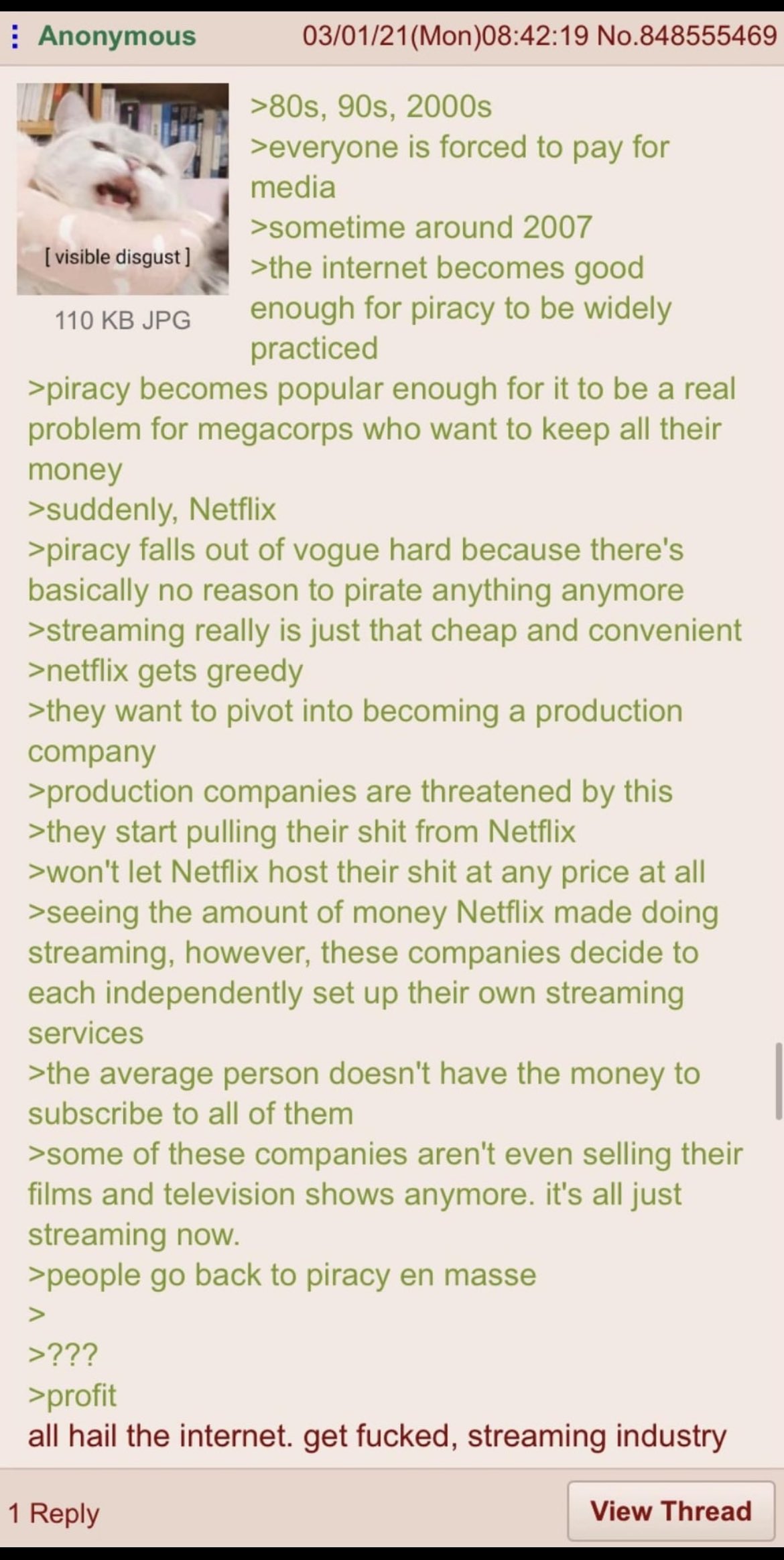

Anon got it backwards, networks noticed how profitable Netflix was and bumped the price for Netflix to stream their stuff. Netflix responded by producing their own content rather than leasing others’ at exorbitant rates. Then Netflix later got greedy and bumped their prices, lowered their quality, and cancelled all of their good shows.
RIP Inside Job
Unpopular opinion, but I wasn’t a fan. Was it a bad show? No! Did I enjoy it? Sometimes. How it developed the cult following that it has, I can’t quite piece together. Fantastic voice acting and sound design can only pull so much weight!
An excellent concept with some interesting opportunities, butchered by regressing it to the same kitschy formulaic plotlines as every other uninspiring adult animation show. I don’t want Big Bang Theory, I want Twin Peaks.
Fantastic acting and production quality can elevate any media but especially TV shows. Look at Shrinking for a prime example. It has the production quality of Dispatches From Elsewhere but it’s essentially a three camera sitcom like Modern Family or hell All in the Family. And it’s KILLING right now.
People like the humor of Inside Job and the fantastic quality made it so much better.
I guess if you’re in the market for cola, you’ll look for the cola with the best taste. But seeing a discontinued cola lauded as a fallen behemoth is a bit odd, from my perspective
I didn’t care for it either.
I gave it like 3-4 episodes but couldn’t do it. I thought given the cult following and reputation it’d be right up my alley.
#everybodysawful
Except people aren’t necessarily going back to piracy en masse
Torrent sites are dwindling, even the big ones have sad membership numbers compared to 10yrs ago
A large amount of internet users access the internet via devices that are openly hostile to or outright disallow anything that would enable piracy. The devices are then connected to an internet that is further hostile and aims to steer you away from anything deemed unsavory
Phones and tablets are cumbersome and unintuitive to navigate. In the case of apple torrent clients are not allowed to be listed on their app store and sideloading is involved and kind of a pain. Chromebooks and windows 11 are better obviously but less utilized then you’d think
But that leads to the second point, which is kind of angry old man yells at cloud, but people are just less tech inclined now. It makes sense because modern tech is designed to oppress the user whereas tech in the late 90s and early 2000s was more to empower them. They don’t bother to figure out how to install applications, use the file explorer, change settings, etc. the very basic steps needed to pirate shit (you obviously don’t need to be a super hacker). They don’t need to. The command prompt or a terminal is something that makes them think you’re hacking shit
They download applications like steam and then their browser auto opens the installer, then steam handles installing games and mods from that point on. They are safeguarded against having to deal with the icky filesystem and their hand is held every step of the way. Or they just download stuff from the official MS app store and even more hand holding. It’s okay because they’re only gonna install 5 streaming apps anyway and then use the browser to visit the 6 approved websites that google or bing search sends you to for basically any query.
And that’s only if they actually have a proper computer. If they have a tablet or phone they either are pushed extremely heavily towards the above scenario, or in the case of apple they simply have no other option
10 years from now the internet will just be 2-3 social media sites, a few shopping conglomerates, wikis, and streaming sites. The devices used to access will no longer let you access the filesystem directly, apps will be unable to be installed if they aren’t code signed by apple or google or ms or whoever, sealed in epoxy, and draconian drm everywhere. 40 years from now your grandchildren will think you’re weird for complaining about how you used to have autonomy and authority over your devices once you owned them and they’ll remind you it’s time to pay another $400 bezobucks to rent the google chrome ar internet hub for another month because you’re not allowed to own it and it’s a federal crime to take it apart
Direct download piracy and streaming is surprisingly popular.
With a bit of effort you can stream any movie directly to your TV for a few moneys a month (or free, but paying for the essential bits removes the jankiness)
Basically you select the movie, a system finds the torrent or DDL, a service downloads it (or has it cached) and you stream it to your device.
With a bit of effort you can stream any movie directly to your TV for a few moneys a month (or free, but paying for the essential bits removes the jankiness)
Something I learned back in the day: “Never pay for warez”. Pirate all you want, the moment you are paying, pay the creator of the product you’re interested in, not someone who pirated it and wants to profit from distributing it without a licence.
While I agree with the trend for the average person, I think in pure numbers there are always going to be more tech savvy people in the foreseeable future.
Sure, 80% of people online in the 2000s and 90s were all tech savvy hobbyists, but their numbers was low (let’s say a million).
Now only 0.5% might be tech savvy, but that is 0.5% of a billion people, which would be 5 mil compared to 800k above.
I obviously picked convenient numbers but the point still stands, there are lots of tech savvy places today and it’s growing, just not as fast as the non tech savvy crowd unfortunately.
I am personally still friends with two people who even know how to navigate their filesystem beyond clicking the downloads or my documents link in the start menu. I hope you’re right, but all I see around me at work and personal life is ignorance. People can’t even figure out how to use their phones beyond the basics.
Yeah, on average you will find less and less tech savvy people in real life moving forward.
But if you were to ask a programming question on the most popular coding site, you would get more responses today than 20 years ago.
Yeah, but what’s the relative quality of responses? I feel like the bar for “tech savvy” or “competent at programming” has dropped precipitously. And unfortunately, the number of people confidently asserting a wrong answer online is high in my experience, including on programming forums.
Think about it this way,
Has the total number of C++ experts gone down since 20 years ago or has it gone up? The total market share has gone down, but total amount of systems running C++ has increased.
Today is more lucrative to be an expert than 20 years ago, and there are far more positions that offer good money.
It’s also easier to make money by knowing very little programming.
So the question is, would the people capable of being a true expert avoid that path today even though it’s more lucrative, I don’t think so.
The only difference is, 20 years ago, only the true experts were online, now they probably don’t enjoy being online as much and are probably big fans of old school hobbies (like wood working)
Torrenting is less common but thats because most piracy is just streaming now. Its more profitable to host a streaming site, youre less likely to get a virus streaming compared to torrenting now, and its easier to access and find.
The less likely to get a virus point is arguable but I get what you’re saying
Really the thing is private trackers kind of put themselves out of the game. Like let’s look at a common path to get to some of the more well known coveted private trackers:
Do an irc interview about the rules and culture of a site with a staff member. You will have to study, sit in irc for god knows how long for someone to be available, and pass. Alternatively, know someone already in who trusts you and will burn an invite
Then you’re in. Now you have to upload music, which is much less commonly pirated bc music streaming isn’t fucking stupid and fragmented these days (though pricing keeps rising so maybe we’ll see a return). To get to the point where you can be invited to sites that would actually have movies and tv and games and shit you need 25 gigs uploaded and a 0.7 ratio minimum. Also the sites been around a while and the people on it are meticulous music collectors so finding something to upload is actually challenging, when you do you have to make sure you meet the strict guidelines, etc
That’s a lot! Like learning to use a torrent client is easy. Asking a 2024 tech dummy to learn irc? Come on. At the same time the filter is needed, the people who truly want to be there are what make the communities so great, and the vetting process is what keeps feds out (for the most part they go for low hanging fruit sites like rarbg)
Anon: 2007
The music industry ca. 1981: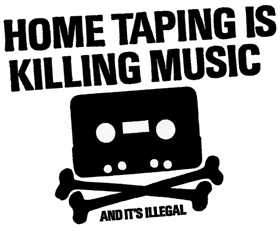
So we left side b blank so you can help!
I feel like people are ignoring that Netflix was bleeding money during their “golden age”. They only switched to being profitable a couple years back. A lot of times what people describe as enshittification is just unprofitable companies having to come up with an actual business model as venture capital dries up.
Also, merry Christmas:)
You can also argue that silicon valley has that particular business model of purposely making a product look great and cheap until enough people sign up.
It’s distinct from how most companies run in the red at their inception in that those traditional businesses would gladly be in the black but are waiting for economies of scale or building a reputation among consumers.
And that’s probably why people get so disappointed w/ tech companies.
It’s not that the prices they switch to are unreasonable, but that they hike prices after getting a user base, so it feels like a bait and switch instead of an early bird discount. If they made it an actual early bird discount, people would probably be fine with it.
Or maybe they keep prices the same, but drop content while keeping prices the same. If they instead structured it as a base tier and an “early bird” free access to a higher tier, which then starts costing money after some time period, I also think people would be okay with it. I have always thought Netflix should have packages, so you could opt-in to additional stuff like maybe Disney or HBO content. If Netflix did this early on, maybe Disney and HBO wouldn’t have bothered making their own streaming platforms and instead just raked in revenue from these higher tier customers, because they get most of the benefit of having their own streaming platform, with none of the costs.
In pretty much every case, I’ll point to Valve’s business model as an example. Gaming companies generally don’t feel the need to run their own platforms, and the ones that do often still distribute through other stores.
That package thing they do on prime video
Yeah, but Prime sucks in other ways. I wish I could combine what I like about Prime and Netflix into one service.
Valve was the first, their business model was basically removing retail (the actual reason for Steam was to make updates trivial, so a Counterstrike update didn’t break half the servers for 2 weeks), for everyone after Steam the business model was removing Steam by replacing it with a Steam clone.
Netflix has a market cap of 300bn. Public markets picked up right where venture capital left off no bother. The problem I think was the competitive forces as much as enshitified business model, though perhaps one cannot exist without the other. Certainly without doing their own content they could easily have become ludicrously profitable as a redistributer only, though I’m not convinced it would have stopped everyone and their dog moving in on the space.
Facebook is really the cleaner example of enshitification. They could have happily printed modest money for ever as the preeminent social network, but they took the greedy approach and morphed into a cesspool.
Merry Christmas to you!
Theu saw the writing on the walls. They knew the big dogs would want a slice of the streaming game and they needed to pivot before the rug got pulled out from ubder them. Hulu was already being constructed when they were recalling shifting into making their own products IIRC. It wasn’t just VC that got them to their golden era, they also relied on the industry bot taking streaming seriously enough and giving them deals that they never would today.
This (though you need to fix your typos). Movie companies saw Netflix as a garbage rerun channel. They were chasing after opening weekends. It took a long time for them to finally launch their own service.
If you take venture capital, you sacrifice your ability to not be greedy. Could Facebook have even existed without VC? Facebook didn’t have ads during its startup IIRC, which meant they had no revenue.
That’s a really interesting hypothetical. They always had ads but obviously the early scale and scope was smaller, so revenue was piddling early on. They had pretty limited costs though and were a super hot ticket to give capital to. I mean they needed some kind of financing for their trajectory, which maybe anyway would have pushed them to monetize aggressively any which way.
Ultimately I don’t think we’ll ever know and the examples of people choosing not to get filthy rich off the back of these innovations are extremely rare. Even when e.g. openAI gets set up explicitly as non profit it gets bastardised, so what chance does a regular joint stock company have of operating in the interests of consumers.
Kinda inverts inverted the causality of Netflix starting their own production and other companies pulling their licences. Netflix started their own production to survive the licences getting pulled, which was inevitable as soon as Netflix looked profitable.
They didn’t get greedy, they probably started out greedy, ran a good service to grab market share, then had to make moves to defend against the predictable greed of the incumbents.
It’s greedy turtles all the way down
This is basically it except the trick was Netflix wasn’t actually all that profitable based strictly off of customers to start. It was a long con. It was ostensibly funded by people placing a bet. They offered a service that wasn’t just disruptive, it was operating at a loss. People piled into the service so licences started to get dicey. Netflix started producing and filming, initially at independent rates amd sweetheart deals in my union territory because everybody looked at as being a little baby studio that needed nurturing and to be fair working a Netflix show back when it started had perks. They placed bets on creators who wanted to make something different. Not nessisarily great but different giving their production teams a lot of creative freedom. Paid lunches, cell allowance, sometimes better hours and crew gifts when a number of studios like Disney were pulling penny pinching bullshit and trying to pretend they were an independent studio to get lower rates while letting their producers act like skeeze.
Thing was it was a cuckoo all along.
They flushed the market with a business model sustained by outside money so everybody else started doing the same thing. It destroyed all the union and contract protections syndicated television once had particularly erasing residuals. That was the main thing. Creators used to make money off of the amalgamation of their lifetime work by being owed a small amount everytime a rerun was aired… But streaming didn’t do that. They had those sweetheart deals that made streaming services exempt from on demand access counting as replays. So you cut off the career curve of creators from building security and only paid them for stuff they made once turning them effectively gig worker.
Once everyone was playing by the same rules the funding at the top cut out because they got what they wanted out of it they started jacking prices, removing titles, selling advertising because what the hell were you going to do, go back to cable? Now the boom is over and our local Industry is a bloody dust bowl. My seniority has jumped up more in the past year than it has in the full ten years before as folk have been retiring or dropping from the union to find new careers.
Netflix didn’t get greedy (well not in that way). The movie companies wanted to make their own platform, which would have left Netflix with nothing. So they had to become their own production company. They said “we have to become a production company faster than production companies become streaming companies”.
People are willing to pay at least some amount if priced appropriately. Otherwise, we’re going to take it for free. Remember, companies we’re reporting record PROFITS during a pandemic when most people were struggling.
https://www.vendavo.com/all/willingness-to-pay/
https://fortune.com/2022/03/31/us-companies-record-profits-2021-price-hikes-inflation/
lol 2007.
Gentle reminder that i2p exists where torrents can be downloaded anonymously.
All I’m going to say is every computer I had was equipped with 2 disk drives until 2010. Elder Millennials and Gen X know why.
Don’t tell me you copied that floppy
So you can play videogames while burning disks? Idk.
Literally the only thing missing is full migration to H265 or AV1 with a solid bitrate.
It’s still a bit inconsistent due to hardware acceleration capabilities and final file size targets.
Most torrents are too compressed or too huge.
Luckily bandwidth and storage is cheaper than ever, so going for full size quality rips is viable for many.
My I present https://trash-guides.info/
Solid bitrate? I used 400 kb/s AV1 constant bitrate for HD anime, 750 for HD realfilm, results in 300 MB and 500 MB files for 2 hours video, no artifacts. Why does Handbrake default to 6000 kb/s?