Fifty years ago, the average American household spent more on clothing than health care, and putting food on the table cost about as much as keeping a roof overhead.
But hey, that food is cheaper. It’s still way too expensive and unhealthy processed food is more accessible and people don’t have much time to cook anymore, but it’s slightly cheaper. And transportation costs, which should have gone down if we had implemented a decent public transit system rather than have people waste hours of their lives in traffic, but they stayed about the same.
This is poverty then vs now. I can pull up starvation, death by war, death to disease and life expectancy if you like. They all are not supporting your argument.
1970s:
• Number in Poverty: Estimates suggest that in 1970, approximately 1.4 billion people lived in extreme poverty, defined as living on less than $1.90 per day (adjusted for inflation and purchasing power parity). 
• Poverty Rate: This represented about 37% of the global population at that time. 
2020s:
• Number in Poverty: As of 2020, the global extreme poverty rate was approximately 9.7%, with about 700 million people living on less than $2.15 per day. 
• Poverty Rate: This indicates a significant decline from the 1970s, though progress has slowed in recent years due to various global challenges. 

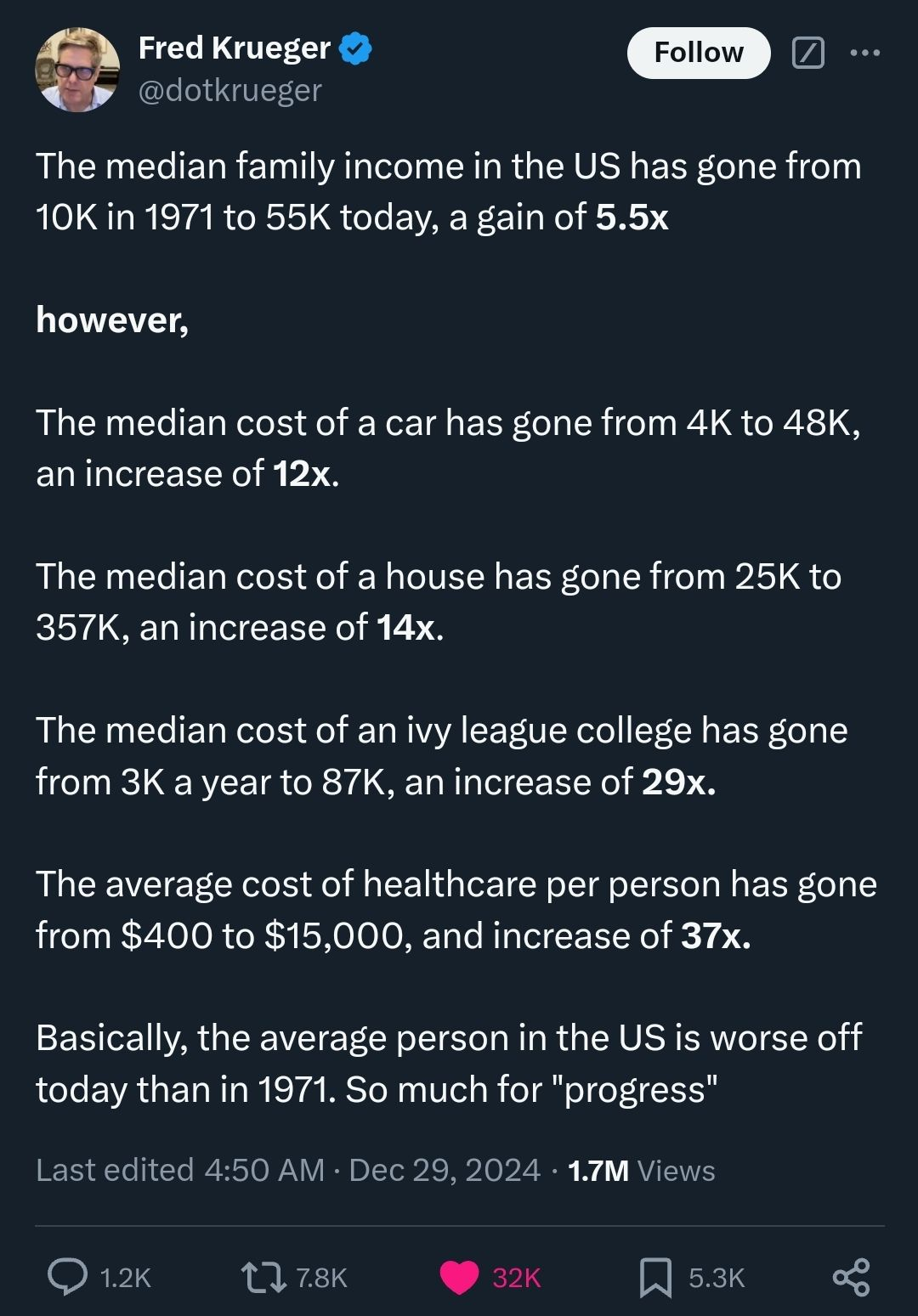
No, everyone in the U.S. on average.
This is not about my life, I’m not even going to be in the U.S. much longer.
Healthcare and higher education have become unaffordable in the U.S.
A quarter of American households live paycheck-to-paycheck.
https://www.cbsnews.com/news/paycheck-to-paycheck-definition/
The average American is over $100,000 in debt.
https://www.fool.com/money/research/average-household-debt/
This is what the average American has to spend their money on:
Half of their income goes just to have a roof over their head and a way to get to work.
And you think the quality of life here is so great? Ask the average person when the last time they had a real vacation was.
What does that chart look like in the 70s?
It’s almost like that’s already been calculated.
But hey, that food is cheaper. It’s still way too expensive and unhealthy processed food is more accessible and people don’t have much time to cook anymore, but it’s slightly cheaper. And transportation costs, which should have gone down if we had implemented a decent public transit system rather than have people waste hours of their lives in traffic, but they stayed about the same.
https://archive.is/VLtfW
This is poverty then vs now. I can pull up starvation, death by war, death to disease and life expectancy if you like. They all are not supporting your argument.
1970s: • Number in Poverty: Estimates suggest that in 1970, approximately 1.4 billion people lived in extreme poverty, defined as living on less than $1.90 per day (adjusted for inflation and purchasing power parity).  • Poverty Rate: This represented about 37% of the global population at that time. 
2020s: • Number in Poverty: As of 2020, the global extreme poverty rate was approximately 9.7%, with about 700 million people living on less than $2.15 per day.  • Poverty Rate: This indicates a significant decline from the 1970s, though progress has slowed in recent years due to various global challenges. 
And yes from ChatGPT.
Then how do you know it’s true? It already got something very wrong for you.