I switched from Stirling to this a few months ago and it’s one of those tools you use once in a while, but not all the time. It’s a good tool to have when you need it and I gladly keep it on my server for those just in case times!

- 2 Posts
- 21 Comments
Joined 3 years ago
Cake day: June 18th, 2023
You are not logged in. If you use a Fediverse account that is able to follow users, you can follow this user.
I keep landing back to Proxmox, My primary use is to run the Home Assistant OS VM which is quite fantastic there. And also, I have NFS sharing setup on the Proxmox server so I can share it between my machines and my home Linux boxes. I’m on Proxmox 8 though and not 9. Debian 13 with Proxmox 9 it turns out at least when I tried it, is really locked down now for running Docker via the host. (Proxmox machine) With Proxmox 8, I can still install Docker and run my containers there, then use Portainer to manage them sometimes, but rarely now days. You can also probably do it the “Correct way” as some may believe by setting up a VM or LXC in Promox to host docker containers. I do that with one subset of containers but not all.
Another option you may want to consider is XCP-NG, which is another hypervisor and IMHO ran Home Assistant a tad bit faster for me, but it will not allow you to mount existing drives without erasing them (I can’t do that with my disks). Additionally, it seems to be on an out of date CentOS build which is no longer updated. (My notes from this are from a year ago when I tried it and I think some of it has changed, but for storage: https://docs.xcp-ng.org/storage/) You can see what’s going on there.
Most people will say to host Truenas or something like that in a VM via Proxmox but honestly, it isn’t too difficult to set up with a tool like Cockpit to manage the shares. I’ve played with most of the setups recently and recently tried going with a Debian 12 install on bare metal with the Home Assistant VM running which I could, but I had more crashes with the server and it never started the VM in spite of being told to do so. I honestly didn’t stick around though, so YMMV if you go that route.
You could always use ntfy.sh if you are wanting to keep it light weight, I know there seems to be a heavy following and happy community with it. I personally use Gotify which has been nice and easy to use and just works for my needs. :) I looked at the shoutrrr repo and it seems to be either abandoned or just no longer updating maybe because their is no need to in the Dev’s eyes. They also develop Watchtower which hasn’t been touched in about 2 years ago. I have never had any issues with Watchtower so I think it may not need much maintenance. I do see though that they are working on a new project: https://github.com/containrrr/shepherd but it’s also a bit stale.
To make it seamless so you can still Thunderbird, someone made a Docker image of it here: https://hub.docker.com/r/kebles/wanderbird But, you can probably find a newer release somewhere newer than 4 yrs old like this one. :) The point is, if you are wanting to keep it in the Thunderbird umbrella, then it’s most likely been Dockerized.
I’ve Tried Cypht recently, but if you are using Gmail, it has a conflict there so it won’t work out of the box without some extra work I think.
 1·2 years ago
Thanks for sharing this! I used it today to resize my Very large phone selfie I had to do for a profile image update at work and it did very nicely! Much faster for me to do that then load it in Gimp and scale it down since I was running late for work. : )
Hmmm… Interesting! I didn’t realize there was a fork, but then again, this is one of those tools I’ve had running for several months close to a year or so and never thought about it. The original dev, Corentin, has been working on many more new projects: https://bsky.app/profile/corentin.tech .
Maybe your own adblocker, I thought about doing that myself, I use the public one from adguard on my phone (dns.aguard-dns.com) but having it on your own device would be pretty slick perhaps. But thinking about it more, Google wouldn’t just let you use an internal IP for the private DNS. I have tried it with my locally hosted adblocker and it rejects it.
Or you could set up a dashboard like Homepage or Dashy, or Flame or ? Ultimately, your imagination would do! :)
I’m not the host or author of this one, but I know it already covers what you are wanting to do. ;)
https://github.com/ArabCoders/watchstate
I use this one for my Emby server and it keeps track of what we watch, and so far so good. I made it our Trakt.tv replacement and have no complaints so far.
What about just buying Matter Bulbs? Or supported WiFi Bulbs? I have 4 which work nicely! Aidot brand so it’s not known brand but it was good priced. I know you said they were three way switches so that may matter if you are wanting to utilize the 3 way dimmer, but with HA, it should be easy to do!
This would also be depending on which lights you want to control, as some may not be controllable such as maybe the bathroom lights. As an apartment dweller who rents, I put mostly smart lights every where I could in my home so I can control which ones come on or off on a schedule. Change colors as well to help set the mood with my floor lamps etc…
 8·2 years ago
Probably the most surprising thing I discovered with Home Assistant was the amount of electricity used by our washing machine in the supplied one in our rental. I hooked up a Kuaf Energy monitoring plug (PLF12) and was able to track each cycle by measuring the power draw. Something like this:
Fill 6.00 - 7.00 W Wash 493.5 -788.5W Drain 405-450W Spin 8.0 8.84 A + 498-800W
These are my rough notes and observations, I’m planning on creating an automation to indicate on our dashboard the current state of the washer making it a tad smarter. :) Also to alert us that it’s finished!
The other one I discovered was the amount of energy the Dishwasher pulls. . It’s a complex power draw and I’ve only managed to get our dashboard to show it’s running successfully. There is a huge variance in the power draws, that sometimes, I found that if it jumped by a volt or two, it would falsely say it’s in the second rinse cycle when it’s really filling the basin. Nonetheless, it was surprising to see how much less energy I thought the were using was.
I put a 4-1 one Zooz sensor up above the hall pointing at our front door, so it captures every entry point into our upstairs apartment. When I first set it up, it was a bit unsettling to have it detect even the smallest movement, eventually some adjustments were made and it’s more refined and not so trigger happy.
The biggest metric I discovered is just how humid our place gets! As a direct result, I bought a dehumidifier which we run year round. Living in the Pacific NW makes managing humidity challenging. (You know the old jokes about it being rainy all the time, yeah…it sort of is) As a result, we have a dehumidifier which runs year round almost non-stop. Not so much in the summer months. While most people buy a humidifier for the winter, we run it more in the winter as it’s too cold to exchange the outside air with the in which can lower it down to as low as 10-15% in the summer. We learned our comfort levels to be around 45-50% instead of the 75-80% it was before we bought the dehumidifier.
We are planning on relocating sometime this year to the other end of our state which is a different climate, so it will be a new discovery period of temps and humidity for us, for this, Home Assistant will be coming along for the ride! :)
To add to this, I have tried Obsidian notes which is super highly recommended by many. I also have tried self hosting Bookstack for logging my notes etc… But every time I tried it, nothing ever matched what I could do with Joplin which was exactly as what other said, rock solid and I have yet to run into any device which can’t handle the client. I will say that the launch time on the one on my machine (Arch Linux) is a bit slow, but after it’s launched, it’s very easy to bring up and use as needed. :)
 2·2 years ago
I have a Pixel 8a from Verizon, as someone else here said, they sometimes have crazy deals. This was a free one (through bill credits) for us. It was right after Google released that version and before 9. I quickly discovered that even with Google’s beta program which you can FREELY USE and all it requires you to do is connect your phone via usb through the web and it patches your phone via Google’s site to install it. I’m a beta testing type of person, so I was all in, until I discovered there was no way no how because of the bootloader.
Then, on top of that the, GraphineOS is not able to be installed with it locked as well. I haven’t approached Verizon about unlocking the bootloader. I’ve heard some success stories on XDA I think it was about people getting theirs unlocked through them. (Probably if you get a tech who’s in a good mood helps).
 1·2 years ago
I deal with an issue with Firefox where it causes my Home Assistant dashboard become non responsive if the tab is not the primary one always on screen. I think it’s something with the forced snoozing of tabs. I’ve tried other Firefox based browsers and face the same problem. So this leaves me with… Chromium based browsers. As a Linux user, it’s either Firefox or Chromium based. With that said, I have not had the issue with the Chromium base, but because it’s mostly consumed by Google, I reject it mostly.
I did find that Zen was very nice to look at, and they do have an opinionated way of setting up the tabs (I don’t care about the vertical tabs). They also seem to be wanting to roll out their own extension store? In the form of “Zen Mods” but are also cross compatible with Firefox Extensions so that’s good I guess. I use a rolling release (Arch) OS, so I do see a lot of updates to Zen, the devs seem to be really working on it. For now - I’m on Firefox dealing with the unusual Home Assistant thing. I’ve used Firefox since it was before version 1 so I’m a bit stuck in my ways. :)
I really wish that there was another browser engine there which I could use which supports the Adblocking and Bitwarden (My most important extensions). It’s a bit disappointing to see that Edge, and all other browsers have adopted the Chromium base. I am hoping that with the latest judgement and order against Google to sell off the Chrome browser, sticks and if so, that the new owner(s) will strip it of some of the garbage which has been forced on the code base. (Manifest v3 comes to mind). The only Chromium based one I tolerate on my system right now is Ungoogled Chrome and Vivaldi, who has said that they are resisting the Manifest V3 as much as they can and have a somewhat decent adblocking built in using their end. Even though I have DNS level adblocking, Ublock Origin fills the gap with some of the ads which gets past my end.
I’m about 99% sure it does, I don’t use it that way but It does allow DNS zones. For example:
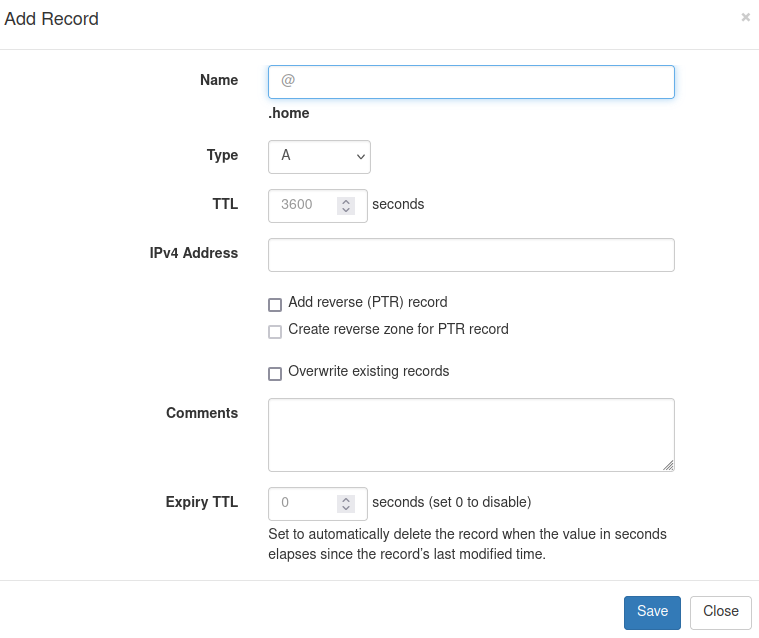
It’s a lot more technical then Adguard Home for sure. Both work just fine though, I came from Adguard Home as I use a PXE server to provision some of my devices and Technitium is super easy to configure that.
I had to create an account as per the usual process for these types of apps, but it was all local. I never had to do one to connect to their servers. I know it generates a unique instance ID which I believe phones home to their servers but I don’t mind personally.
As for my experience, a lot of it is locked behind their paid plans, so I just keep it limited to what I use which is fine. I do like it as it does better than NocoDB for my needs (the input forms is what I needed) and it does better there. I don’t recall the other reasons for not using NocoDB otherwise, but it’s a long while.
Their pricing is here: https://baserow.io/pricing
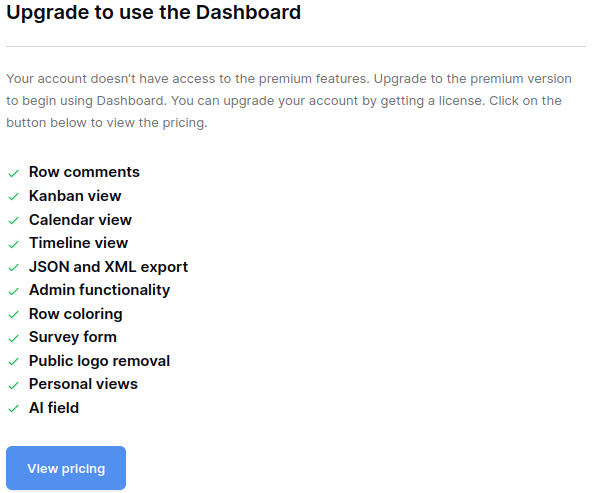
So, that’s mostly what is locked behind. My sleep form I built which feeds the database:
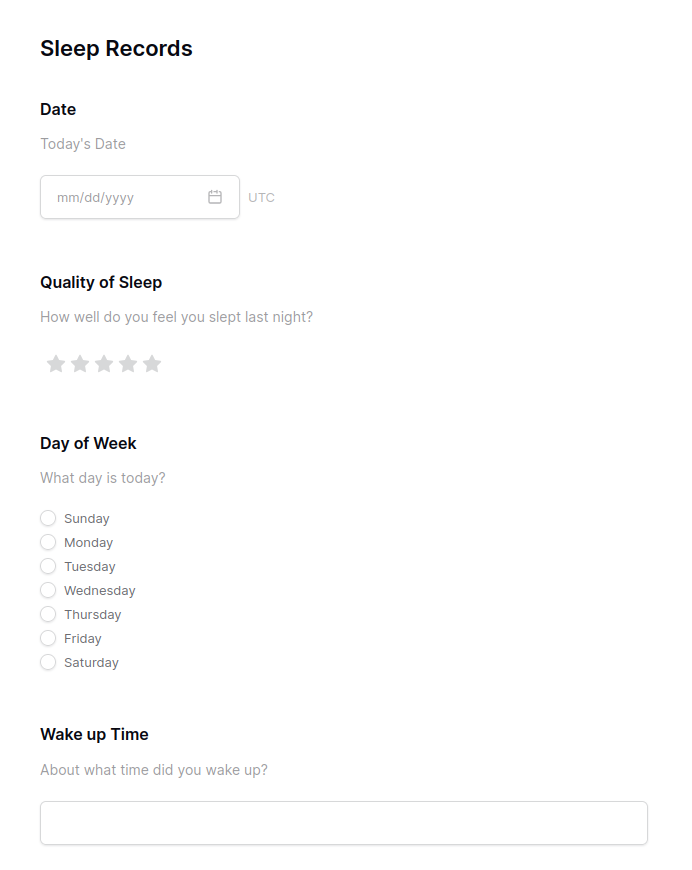
Overall, it does meet my needs so that’s all I ask. :)
In no particular order, the most essential ones are those I constantly use throughout my day and also weekly.
Proxmox holds all of these in different LXC’s and VM’s
- Home Assistant
- Pocket-ID - https://github.com/stonith404/pocket-id (Exclusive Passkey login system as in -no un/pw just your Passkey which - doubles as an OIDC provider)
- Homepage (By Ben Phelps of gethomepage.dev)
- Vaultwarden
- TechnitiumDNS which handles all of my DHCP and Adblocking in a one system, extremely capable software especially useful for SOHO too.
- Baserow - Airtable alternative. It holds certain items of importance like what MAC address each device in my home network holds and what IP It uses in an intelligent view. I also was using it for a while to log issues with my sleep where I deal with insomnia, so I logged how well I slept, how many times I woke up, how long it took me to fall asleep etc. That was a simple form I created using drag/drop in Baserow and called by a URL.
- OpenVSCode server - makes editing my Homepage (above) yaml and my docker-compose files a breeze! It’s especially nice when you edit it something and it auto saves almost instantly. Makes some of my services change in real-time!
- UptimeKuma - Simply one of the best out there for me
- Gotify - I get alerted to my Tuya based dehumidifer tank being full via Home Assistant, Downtime alerts from UptimeKuma and a variety of other services which I deem higher priority alerts over “fix when you can” ones.
Aside from that, i do have other services I use every so often like Memos, Joplin Server (holds most of my notes), Pingvin and a few others.
Matter runs over your WiFi so as long as your server you run Home Assistant on for example has wired or wireless access you are good to go. My Home Assistant is on LAN and wired so no wireless, but they all communicate through the WiFi network. if you have a Bluetooth dongle or onboard, Home Assistant would also use that to pair and communicate if needed.
2.4Ghz WiFi is only supported and no newer generations yet.
Anxiously waiting for ARCH to update their repos, they YANKED it from the unstable repo so I can’t cheat and download it early. :)
I use the docker version of the Joplin Server, it syncs with everything I’ve thrown at it which is a laptop, my Android Phone(s) over the years and my Desktop with no issues. It’s super basic so you just set up an account in the self hosted server and then proceed to login using the Synchronization settings in your Joplin App.
If you have any existing data, Make sure to Back it up First!
This is my compose I use. Sub with your values obviously.
services:
    db:
        image: postgres:15.4-bullseye
        volumes:
            - /mnt/appdata/joplindb:/var/lib/postgresql/data
        ports:
            - "5432:5432"
        restart: unless-stopped
        environment:
            - POSTGRES_PASSWORD=postgres
            - POSTGRES_USER=postgres
            - POSTGRES_DB=joplin
    app:
        image: joplin/server:latest
        depends_on:
            - db
        ports:
            - "22300:22300"
        restart: unless-stopped
        environment:
            - APP_PORT=22300
            - APP_BASE_URL=https://public.url.example.com/
            - DB_CLIENT=pg
            - POSTGRES_PASSWORD=postgres
            - POSTGRES_DATABASE=joplin
            - POSTGRES_USER=postgres
            - POSTGRES_PORT=5432
            - POSTGRES_HOST=db
            - MAILER_ENABLED=1
            - MAILER_HOST=yourmailhost
            - MAILER_PORT=587
            - MAILER_SECURE=0
            - MAILER_AUTH_USER=Your Email user
            - MAILER_AUTH_PASSWORD=Your Super Secret Password
            - MAILER_NOREPLY_NAME=Your No Reply Name (eg:  Noreply box)
            - MAILER_NOREPLY_EMAIL=no reply email address
            - TZ=America/Los_Angeles
volumes:
  joplindb:
And then in the settings for the sync in the app:
To get there, Go to the Tools > Options > Synchronization
Hopefully this will help. :)