
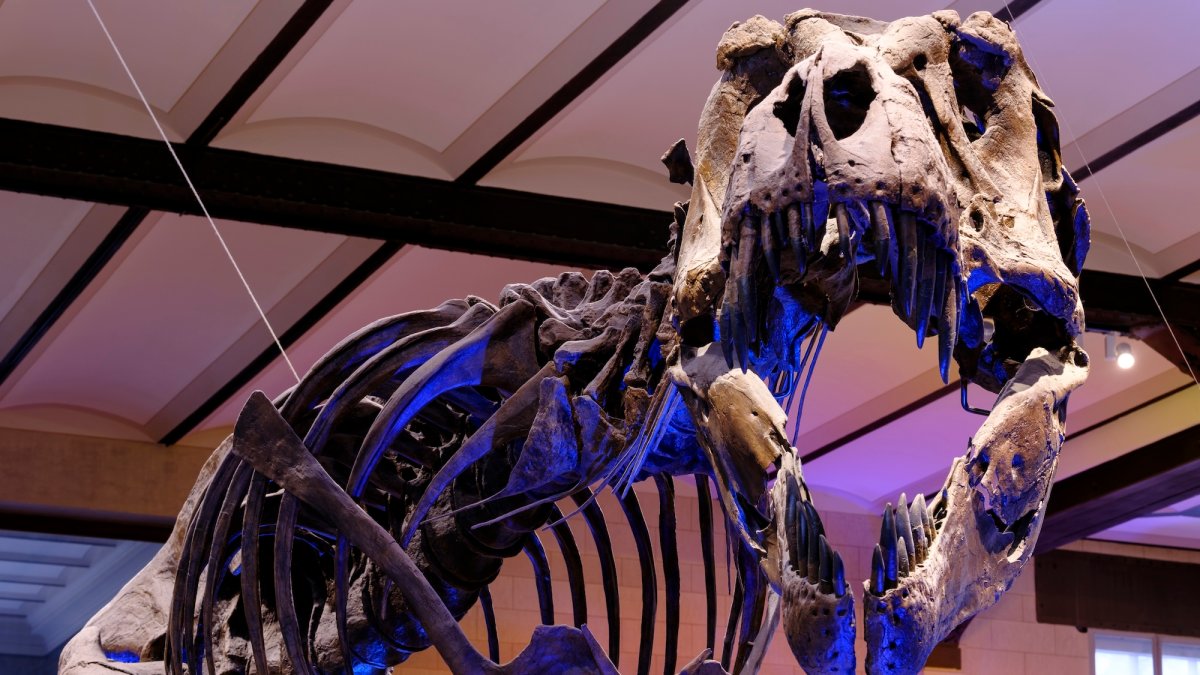
Paleontologists regularly discover fossilized dinosaur bones, but they sometimes locate footprints and prehistoric shells. On rare occasions, researchers have even identified the ancient indentations of a dinosaur’s skin or feathers. But fossilized cells? Researchers have long assumed such microscopic levels of preservation were impossible. But, once again, nature has proven otherwise.
In a study published today in Proceedings of the National Academy of Sciences (PNAS), an international team of paleontologists confirmed the presence of intact biomolecules and mineralized red blood cells inside fossils of a 115-million-year-old dinosaur. Although previous work has suggested similar possibilities, the team’s research is the first to chemically identify oxygen-carrying blood compounds known as heme.
“This really is a landmark discovery,” Kliti Grice, a study co-author and chemist at Curtin University in Australia, said in a statement. “These findings challenge longstanding assumptions that certain biomolecules such as hemoglobin cannot survive deep time.”
The evidence exists inside the fossilized limb bones of a juvenile Aratasaurus museunacionali. Discovered in 2008, A. museunacionali was an Early Cretaceous theropod that lived in present-day northeastern Brazil. The fossils suggest a dinosaur measuring over 10 feet long and weighing about 75 pounds, but given its young age, A. museunacionali likely grew even larger.
After carefully examining thin slices of the fossils, paleontologists located the mineralized red blood cell molecular components, along with a complex manganese oxide called hausmannite. This material helped maintain the cellular structures of heme, a ring-shaped molecule that contains iron and binds many proteins, especially hemoglobin. The hausmannite also helped preserve additional biomolecules found in the blood, such as the amino acids in collagen. The study’s authors theorize this level of preservation could only occur following a rapid burial in an environment that was rich in microbes, but low in oxygen at the same time.
BINGO
Okay doc. Explain it like I’m 5. Can we Jurassic Park yet or nah?
Essentiall, as I understand it you will never be able to as DNA’s half life is less than the time since dinos roamed.
So… take chickens and select for dino characteristics. We’ll have recognisable dinosaurs, ish. Eventually?
Honestly Emus already exist.
Nah, we just confirmed that dinos had blood, because we found fossilized blood
But theoretically can we use that blood to you know…
Blood doesn’t necessarily mean that DNA is also present.