
Hi, I’m the independent developer behind PaperPhone in China. I built two AGPL-3.0 editions because one feature set does not fit every privacy threat model.
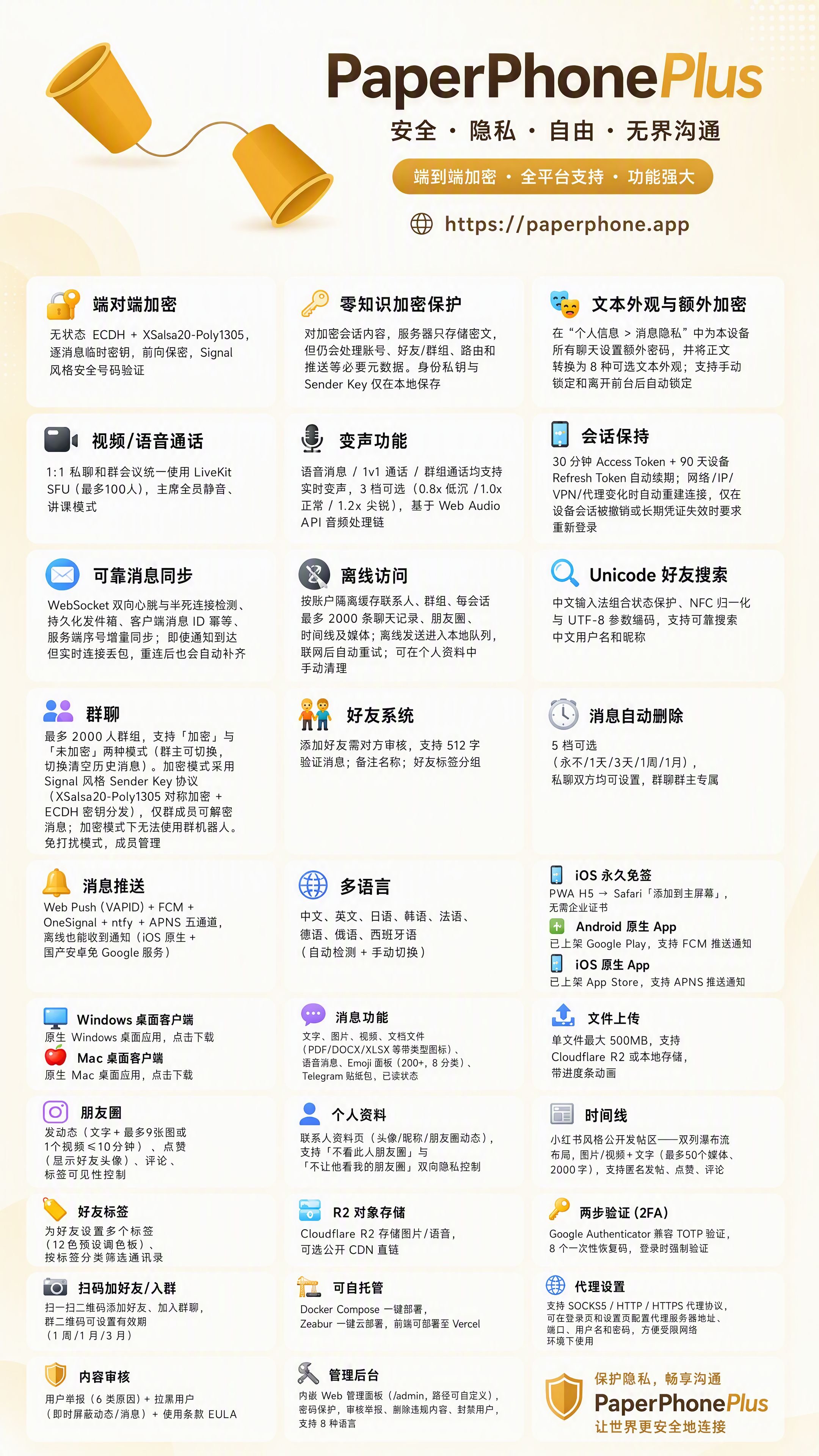
PaperPhonePlus is the full edition, with native iOS, Android, Windows and macOS clients, private and encrypted group messaging, social features, and LiveKit meetings for up to 100 people.
PaperPhoneLite deliberately removes calls and social modules. In production it connects only through an embedded Tor client to a Tor v3 onion service, with no clearnet fallback. Its key agreement combines X25519 and ML-KEM-768, and messages use XSalsa20-Poly1305.
Both editions also support an optional Message Privacy password stored only on the device. Before the normal E2EE layer, message text is encrypted again and rendered in one of eight appearances: Buddhist-style text, random Chinese, I Ching symbols, Korean glyphs, Egyptian hieroglyphs, cuneiform, “core values” text, or alphanumeric text. The appearance itself is not cryptography; it is the visible representation of the extra encrypted payload. Participants must agree on the same password, which is never uploaded or automatically synced.
Self-hosting is intended to be straightforward:
- Plus: Docker Compose or Zeabur, with LiveKit configuration for calls.
- Lite: Docker Compose + Tor, without requiring a public domain, Nginx, or an exposed application port. MySQL and Redis can remain private.
Neither project has had an independent security audit, so I’d especially value feedback on the threat models, protocol choices, and deployment documentation.
Website: https://paperphone.app/?lang=en